There is a feeling that is very hard to explain to someone who has not felt it. You are eating well. Drinking enough water. Getting some movement in. Sleeping on time. Nothing is technically wrong. But something feels off. The body feels heavy. The stomach looks puffy. The energy is not quite there. And no matter what you do, that feeling does not fully go away.
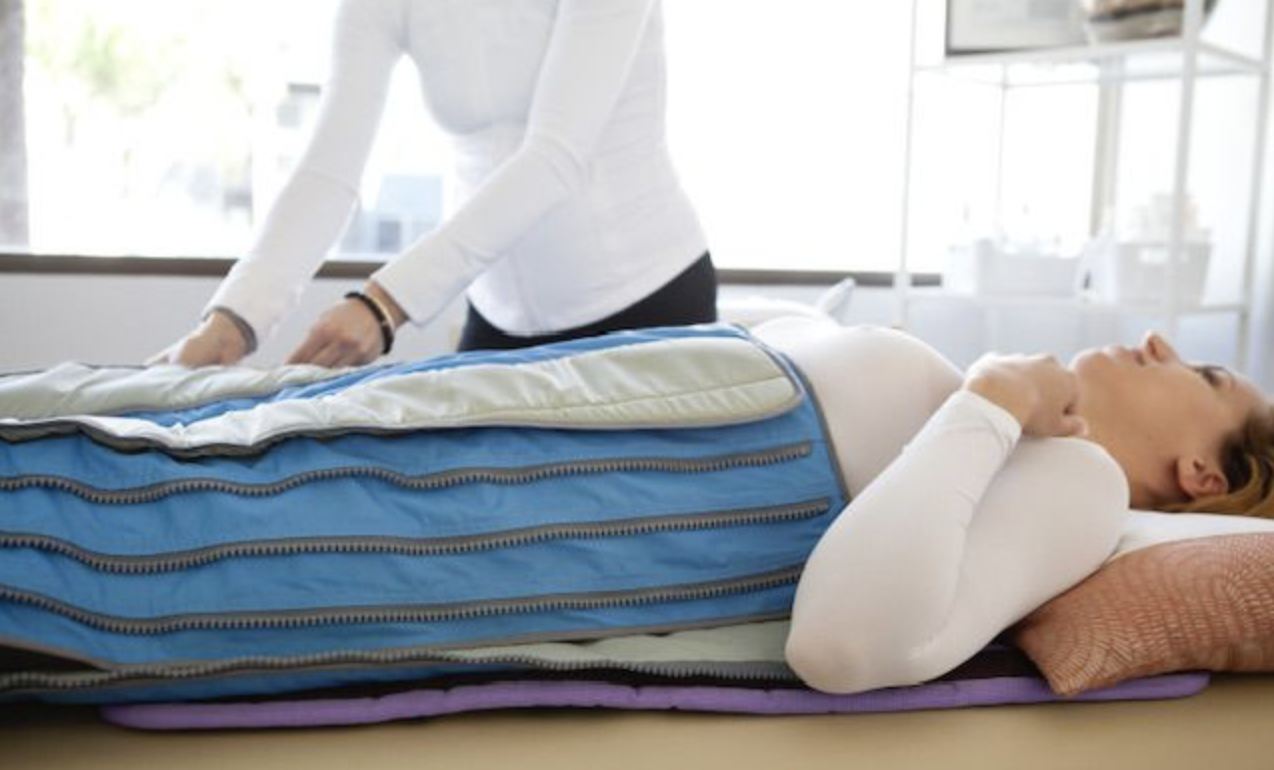
One effective method to address these issues is through pressotherapy, which aids in detoxification and promotes overall well-being.
Incorporating pressotherapy into your wellness routine can significantly enhance your overall health.
Most people quietly assume this is just how their body is. Or they blame stress. Or they try another detox tea and feel nothing.
What very few people know is that the problem often has nothing to do with what they are eating or drinking. It has to do with what their body is not clearing.
What Detox Actually Means
The word detox has been borrowed by every juice brand and crash diet on the market. It has been stretched so far from its actual meaning that most people do not know what real detoxification looks like inside the body.
Here is what is actually happening. The body has a system called the lymphatic system. Its job is to collect waste, excess fluid, and cellular debris from the tissues and move it toward elimination. It works quietly, continuously, and without any announcement. When it is functioning well, you feel light, clear, and energised.
But the lymphatic system has no pump. Unlike the heart, which drives blood through the circulatory system, lymph fluid moves only when the body moves. And in a lifestyle where most hours are spent sitting, under stress, or running on poor sleep, the lymphatic system slows down considerably.
Fluid stagnates. Waste accumulates in the tissues. The body starts to feel like it is carrying something it cannot put down. That heaviness. That persistent bloating. That sense that everything is right but something is still missing. This is often the lymphatic system struggling to keep up.
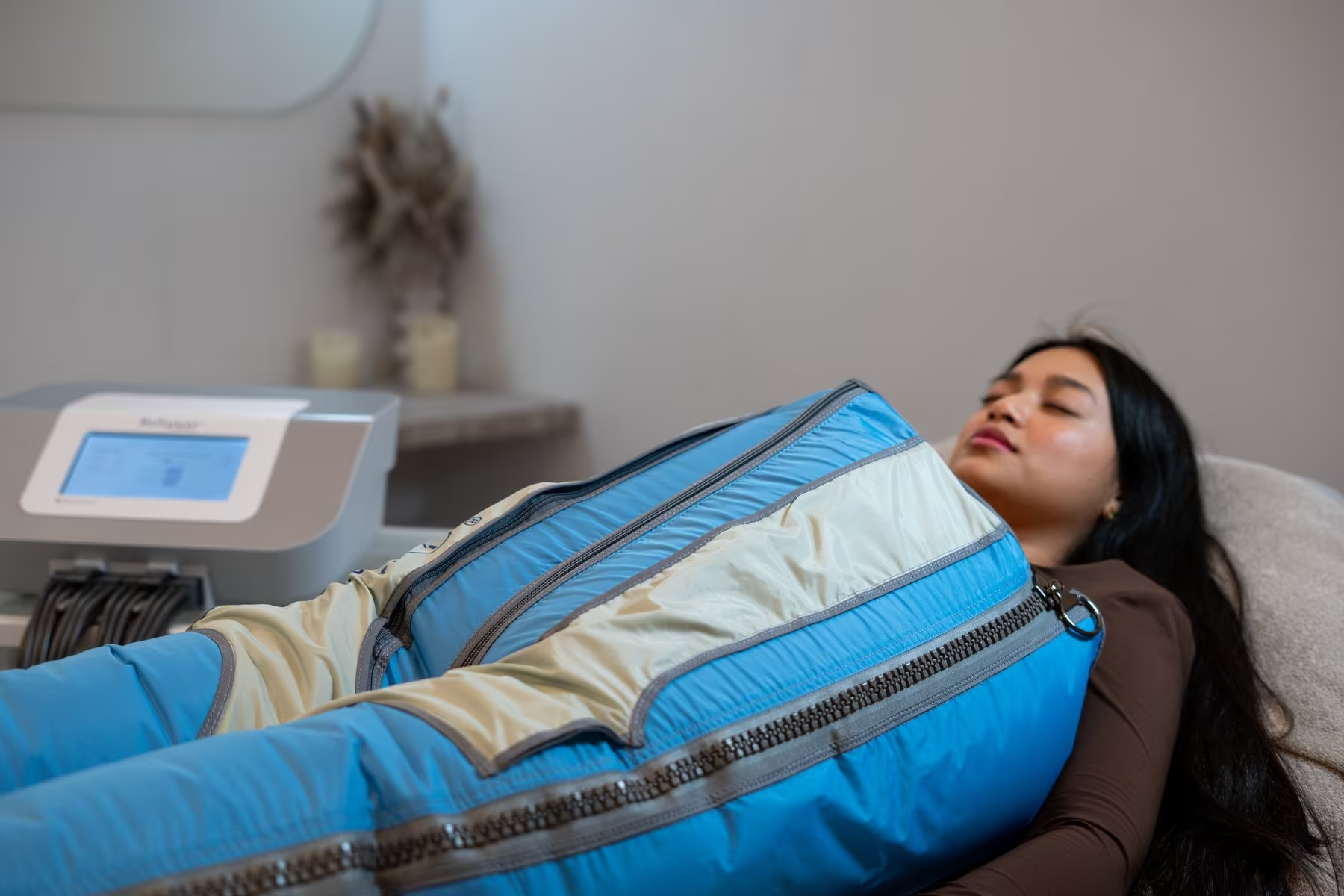
Pressotherapy works directly on this system. The sequential air compression mimics the natural movement that keeps lymph fluid flowing. It does not introduce anything into the body. It does not force anything out. It simply gives the lymphatic system the push it has been waiting for, allowing the body to clear what it has been holding on to.
This is why many people are turning to pressotherapy for a more effective detox experience.
That is what real detox looks like. Not a three-day cleanse. Not a supplement. The body doing what it was always designed to do, finally given the right conditions to do it.
What This Has to Do With Slimming
When most people hear slimming treatment, they picture fat loss. And while pressotherapy does support the body’s overall slimming process, the mechanism is more specific than that.
Pressotherapy specifically targets areas where excess fluid builds up, making it an essential treatment for those seeking a slimmer appearance.
A significant part of what makes the body look and feel larger than it should is not fat. It is fluid. Excess fluid retained in the tissues adds visible bulk around the abdomen, thighs, and legs. It makes clothes fit differently. It makes the stomach look bloated even after a light meal. It creates a softness that does not go away no matter how clean the diet is.
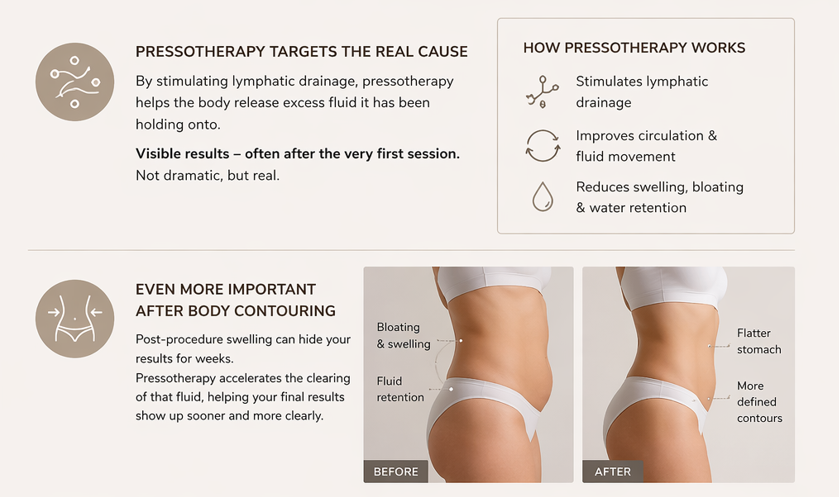
Pressotherapy addresses this directly. As lymphatic drainage improves, the body releases the fluid it has been holding. The results are visible, often after the very first session. Not dramatic. But real.
By utilizing pressotherapy, clients often find that their body feels lighter and more aligned.
For those who have had body contouring or fat reduction procedures, pressotherapy plays an even more important role. Post-procedure swelling can hide results for weeks. Pressotherapy accelerates the clearing of that fluid, helping the outcomes of the treatment show up sooner and more clearly.
Over consistent sessions, improved circulation also supports collagen production and skin elasticity. The skin firms up as the fluid reduces. The body starts to look the way it was always supposed to look, without the layer of retained fluid sitting over everything.
Regular sessions of pressotherapy can lead to ongoing improvements in body composition.
The Part Most People Overlook
Circulation does not get talked about enough in wellness conversations. It is not as visible as slimming or as trending as detox. But it is the foundation that everything else depends on.
When circulation is poor, the skin looks dull. The legs feel heavy and tired by midday. The hands and feet are always cold. Recovery after exercise takes longer than it should. These are not random inconveniences. They are signals.
Pressotherapy improves both blood flow and lymphatic circulation at the same time. The compression assists the veins in moving blood back toward the heart, which is especially important in the lower limbs where blood works against gravity all day. Nutrients reach the skin. Oxygen reaches the muscles. Waste from exercise clears faster.
Through consistent use of pressotherapy, clients report feeling revitalized and rejuvenated.
Most clients notice this benefit immediately. Before they see any visible change, they feel it. A lightness in the legs. A clarity in the body. An ease that was not there before the session.
That feeling is circulation doing its job properly. And once the body remembers what that feels like, it is very hard to go back to ignoring it.
Three Benefits. One Treatment.
Detox, slimming, and improved circulation are not three separate goals. They are three expressions of the same underlying shift happening inside the body.
When the lymphatic system is moving well, detox improves. When fluid retention reduces, the body looks and feels slimmer. When circulation is strong, the skin, the energy, and the overall sense of wellbeing reflect it. Each one supports the other, which is why clients who come in for one reason often notice changes they were not expecting.
The benefits of pressotherapy extend beyond just physical appearance, touching on overall wellness and vitality.
The bloating reduces. The legs feel lighter. The skin looks clearer. Sleep improves. The body starts to feel like their own again.
That is not a side effect. That is the body returning to its natural state.
Your Body Has Been Trying to Tell You Something
That persistent heaviness, that bloating that will not budge, that feeling of being almost well but not quite. It is not imagination. It is not just stress. It is the body asking for something specific.
Pressotherapy at Vecura Wellness is designed to answer that. A session tailored to where you are, what your body needs, and where you want to go.
When you are ready, we are here.
References (Pressotherapy & Lymphatic Drainage)
- PubMed –
Intermittent Pneumatic Compression and Lymphatic Drainage
https://pubmed.ncbi.nlm.nih.gov/26667851/
→ Shows how compression therapy improves lymphatic flow and reduces fluid retention. - National Center for Biotechnology Information –
Effects of Pneumatic Compression Therapy on Lymphedema
https://www.ncbi.nlm.nih.gov/pmc/articles/PMC5659803/
→ Demonstrates effectiveness of pressotherapy in reducing swelling and improving circulation. - Journal of Clinical Medicine –
Lymphatic Drainage and Its Role in Body Fluid Regulation
https://www.mdpi.com/2077-0383/9/7/2076
→ Explains how lymphatic drainage impacts detox and fluid balance. - International Journal of Medical Sciences –
Compression Therapy in Venous and Lymphatic Disorders
https://www.medsci.org/v09p0273.htm
→ Supports improved circulation and reduced heaviness in lower limbs. - Cochrane Library –
Intermittent Pneumatic Compression for Venous Conditions
https://www.cochranelibrary.com/
→ High-level evidence showing benefits in circulation and edema reduction.

Team VeCura Wellness is a team of certified wellness professionals specializing in evidence-based, non-invasive therapies for improved circulation, body balance, and overall wellbeing.