

You've tried the usual fixes. Stretching, foam rolling, cutting carbs, and more cardio. And somehow there's still that lower back ache that shows up by evening, or that one patch of fat around your midsection that just won't budge no matter how consistent you've been.
If either of those sounds familiar, you're not doing anything wrong. These are two of the most common things people struggle with, and more often than not, they trace back to the same root causes: poor circulation and tissue that isn't recovering the way it should. Once you see that overlap, it opens up treatment options that can actually address both at once instead of chasing them separately.
Why Diet and Exercise Don't Always Cut It
Here's something most people aren't told: stubborn fat, especially around the abdomen, doesn't always behave like total body fat. It can be tied to circulation and tissue tone just as much as calories in versus calories out. Chronic pain works the same way. Pain that keeps coming back despite stretching or rest is often less about overuse and more about blood flow that isn't doing its job.
That's the gap. Non-surgical treatments built around circulation and tissue recovery are designed to fill it, and it's where a treatment called TECAR therapy comes into the picture.
What is TECAR Therapy?
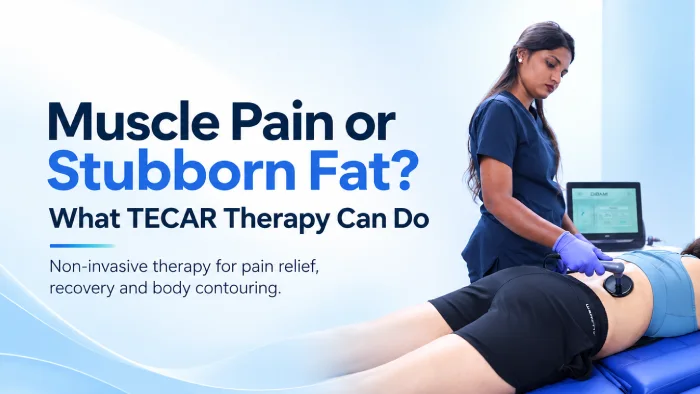
TECAR, short for Transfer of Energy Capacitive and Resistive, uses radiofrequency energy to create heat inside the body's own tissue instead of just warming the surface. Because it reaches muscle, fascia, and deeper connective tissue, it can support pain relief and fat or skin concerns, depending on how it's used.
At VeCura Wellness, it's offered as part of a broader recovery and body contouring program, so the approach can shift depending on what someone's actually dealing with.
On the Pain and Recovery Side
- A randomized study on chronic low back pain found TECAR meaningfully reduced pain, and it didn't seem to matter which mode was used first.
- It's also being studied for tendon-related injuries and chronic overuse conditions.
- Professional sports teams already lean on it to help athletes bounce back faster between sessions.
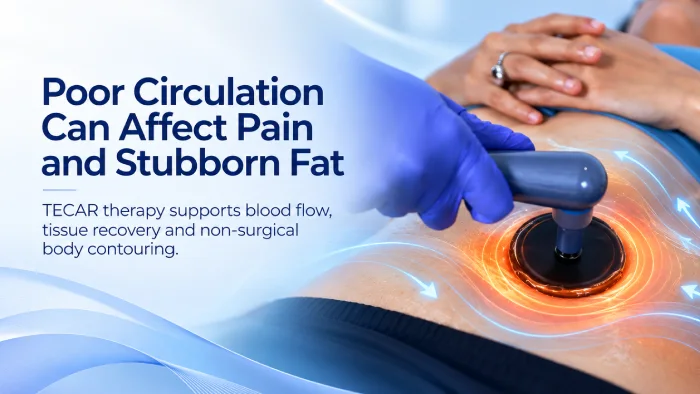
The reasoning behind this comes down to circulation. The heat generated during treatment increases blood flow and oxygen delivery to the muscle, which helps the tissue recover on its own rather than just numbing the discomfort.
The Fat and Skin Side
The fat and skin side has less research behind it, but it's not nothing.
- One controlled trial followed 48 women through ten weekly TECAR sessions, tracking fat thickness and skin quality with ultrasound and skinfold testing.
- The group that received treatment showed a real, measurable drop in localized fat compared to those who didn't, along with tighter-looking skin in the same area.
Worth being honest here: this isn't a quick fix, and it's not a weight loss treatment. What the research suggests is a controlled thermal response building up gradually across sessions, not something that happens in one visit.
And when it comes to visceral fat specifically, the deeper fat around your organs, the research is still ongoing and hasn't landed anywhere conclusive yet. So right now, TECAR's strongest fat-related evidence is for the localized, external kind.
What a Session Actually Feels Like
No needles, no incisions, no anesthesia. Most people describe it as a deep, warm sensation, closer to a heated massage than anything clinical, and there's no downtime afterward.
How often you'd go depends on what you're treating. Pain and recovery plans are usually set by a provider based on the specific issue, while the fat and skin research used ten weekly sessions to get measurable results.
Who This Tends to Suit and Who It Doesn't
This kind of treatment tends to work well for people dealing with:
- Ongoing muscle tension
- Recurring lower back pain
- Slow recovery after physical activity
- Localized fat that hasn't responded to usual efforts
- Loose or less-firm skin in certain areas
It's generally not a fit if you're pregnant, have a pacemaker or other implanted device, have an active infection or open wound in the area, or have an uncontrolled circulatory condition.
A proper consultation should always confirm whether it's right for you before starting.
A Few Common Questions
Why won't my stubborn fat go away even with diet and exercise?
Because localized fat, especially around the abdomen, isn't only about calorie balance. Circulation and tissue tone can also play a role, which is why some areas may be more resistant than others.
Is TECAR therapy painful?
No. Most people find it warm and relaxing, closer to a massage, and the intensity can be adjusted throughout the session.
How many sessions will I actually need?
It depends on what you're treating. Pain and recovery plans are set by your provider based on your specific condition, while the fat and skin research used a ten-week series to see measurable results.
Does TECAR help with weight loss?
No, and it's not meant to. Its evidence for fat is limited to localized, gradual reduction over multiple sessions, not overall weight loss.
Is there any downtime?
There is typically no downtime. Some people may experience mild temporary redness or warmth in the treated area, but they can generally return to normal activities immediately.
Conclusion
If pain keeps coming back no matter what you try, or a stubborn area of fat hasn't moved despite doing everything right, the problem might not be effort alone. Circulation and tissue recovery may also play a role.
TECAR won't replace medical care or a solid fitness routine, but as a supportive option, it's a non-surgical treatment with growing research behind its use for pain recovery and selected body contouring concerns.