


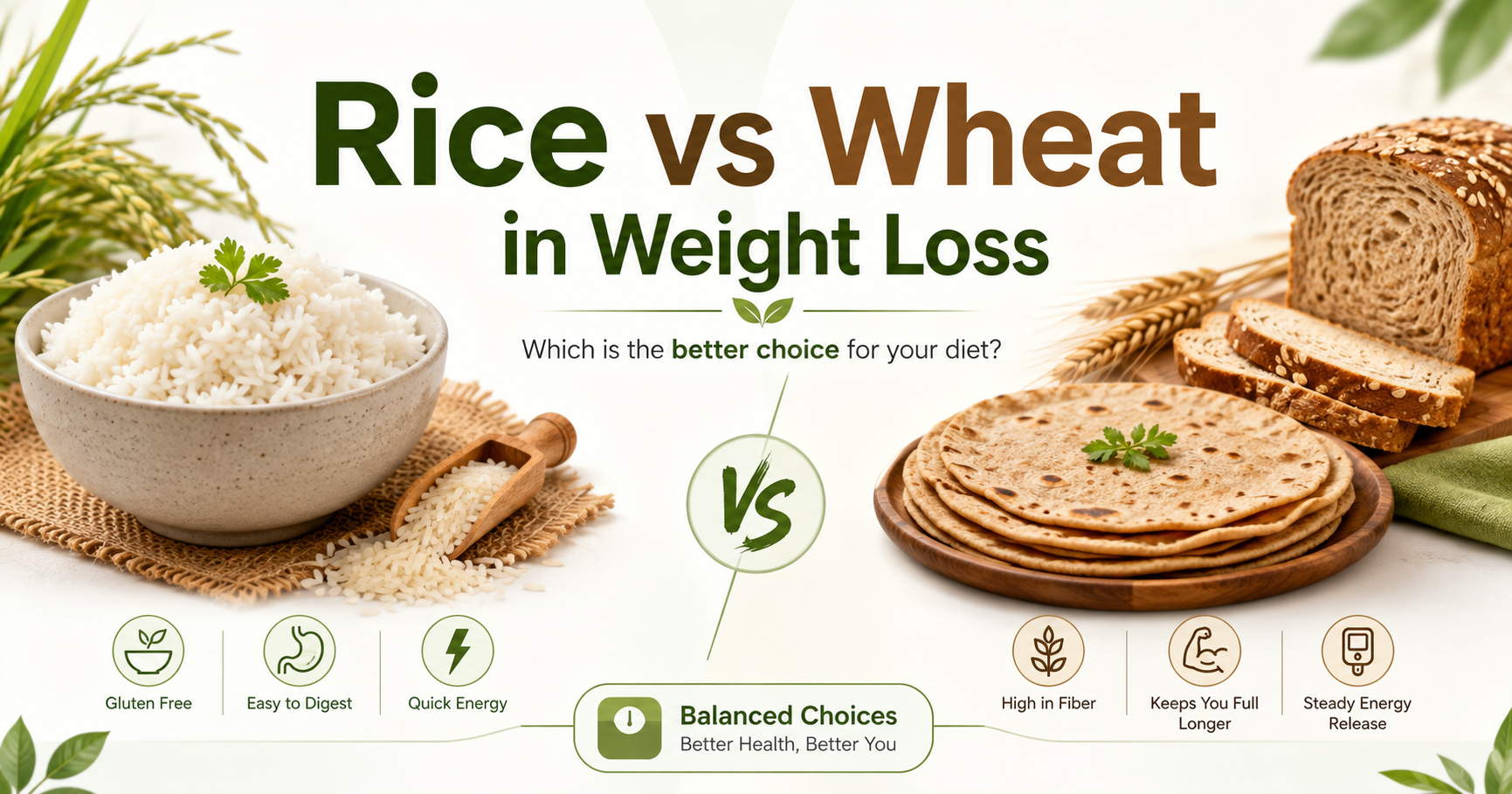
Why This Comparison Matters
Rice and wheat are the two most consumed grains on Earth, together feeding over 4 billion people daily. If you are trying to lose weight, chances are you have already been told to "cut carbs" - but not all carbohydrates are equal, and neither are rice and wheat.
The real question is not simply "which grain" but which form of that grain - white rice versus brown rice, whole wheat atta versus refined maida flour. This distinction is what separates a weight-loss-friendly diet from one that quietly sabotages your efforts.
This guide breaks down the nutritional data, explains the glycemic index, reviews the latest research, and gives you practical strategies you can apply starting today.
Key Insight: The evidence consistently shows that the choice between whole grain vs. refined grain matters far more than the choice between rice and wheat. Both can support or sabotage weight loss depending on how they are processed and how much you eat.
Nutrition Facts: Calories, Protein & Fiber
The table below compares the three most relevant grain options per 100g cooked weight, using data from the USDA FoodData Central database.
| Nutrient | White Rice | Brown Rice | Whole Wheat (Atta) |
|---|---|---|---|
| Calories (kcal) | 130 | 123 | 112 ✓ Best |
| Carbohydrates (g) | 28.7 | 25.6 | 23.8 ✓ |
| Protein (g) | 2.7 | 2.9 | 4.8 ✓ Best |
| Dietary Fiber (g) | 0.4 (Low) | 1.8 | 2.9 ✓ Best |
| Fat (g) | 0.3 | 0.9 | 0.6 |
| Glycemic Index | 73 (High) | 68 (Medium) | 54 (Low) ✓ |
| Sodium (mg) | ~1 | ~1 | 190 (note) |
| Iron (mg) | 0.2 | 0.5 | 2.1 ✓ Best |
| Magnesium (mg) | 13 | 44 | 77 ✓ Best |
Source: USDA FoodData Central. Values are approximate for cooked servings.
Whole wheat leads on almost every marker that matters for weight loss: fewer calories, more protein, significantly more fiber, and a lower glycemic index. Brown rice holds a strong middle ground. White rice, while easy to digest, falls short on fiber and protein - the two nutrients most critical for keeping hunger under control.
Glycemic Index & Blood Sugar Impact
The Glycemic Index (GI) measures how quickly a food raises blood sugar after eating. High-GI foods cause a rapid spike followed by a sharp crash - which triggers hunger again much sooner. This cycle is one of the most underrated drivers of overeating and weight gain.
- White Rice: GI 73 - High
- Refined White Flour (Maida): GI 71 - High
- Brown Rice: GI 68 - Medium
- Whole Wheat Atta (Chapati/Roti): GI 54 - Low ✓
GI Guide: Low (<55) = ideal | Medium (56–69) = acceptable | High (70+) = limit for weight loss
"When my patients switch from white rice to either brown rice or whole wheat chapati - without changing any other part of their diet - they consistently report feeling full for longer and experiencing fewer mid-afternoon cravings. The fiber and lower GI do exactly what the research predicts: they slow digestion, moderate insulin response, and reduce total calorie intake without any conscious effort."
- Registered Dietitian, Clinical Nutritionist
Pros & Cons at a Glance
Rice
Advantages:
- Naturally gluten-free - ideal for celiac disease and gluten sensitivity
- Near-zero sodium - safe for people managing high blood pressure
- Highly digestible - best choice post-illness or for sensitive stomachs
- Brown rice provides good antioxidants and decent fiber
- Light and versatile, easy to pair with proteins and vegetables
Disadvantages:
- White rice has a high GI - triggers faster hunger return
- Very low fiber - poor satiety, easier to overeat
- Lower protein than wheat - less support for muscle maintenance during weight loss
- High white rice consumption linked to increased obesity risk in studies
Whole Wheat (Atta)
Advantages:
- High fiber - keeps you full significantly longer after eating
- Higher protein - supports lean muscle retention during weight loss
- Low GI - steady blood sugar levels and reduced cravings
- Rich in iron, magnesium, and B vitamins
- Strongly linked to lower BMI in multiple clinical studies
Disadvantages:
- Contains gluten - must be avoided with celiac disease or wheat allergy
- Higher sodium (190mg/100g) - note if managing hypertension
- Refined wheat (maida/white flour) is just as problematic as white rice
- Can cause bloating in some individuals
What the Science Says
Study 1 - Journal of Nutrition and Metabolism (2019)
A large-scale study found that whole grain consumption - including whole wheat - was associated with a significant reduction in both BMI and body fat percentage. Participants following a high-GI diet that included refined wheat and white rice showed the reverse trend. The key variable was the degree of grain processing, not the type of grain.
Study 2 - Nutrients Journal (December 2022)
A noteworthy finding: rice preference - consuming rice more frequently than wheat - was associated with a lower risk of excessive body fat and central obesity compared with wheat-preference counterparts in a large Chinese population. This demonstrates that blanket anti-rice advice is not supported by the evidence.
Study 3 - European Journal of Clinical Nutrition (2018)
High whole-grain rice and whole wheat consumption was significantly and inversely associated with body mass index and body weight. Substituting whole wheat or brown rice for white rice can also lower the risk of developing type 2 diabetes.
Study 4 - International Journal of Preventive Medicine (2015)
A review of multiple trials concluded that consuming whole grains as part of a balanced diet leads to significant weight loss and improved insulin sensitivity. The mechanism is primarily through fiber-driven satiety and improved glycemic control.
Research Summary: Whole wheat and brown rice both support weight management. White rice and refined wheat (maida) both undermine it. The battle is not rice versus wheat - it is whole grain versus refined grain.
Dietitian's Verdict - Which One Wins?
For weight loss, the evidence-based hierarchy of grain choices is:
1st: Whole Wheat Atta ≈ 2nd: Brown Rice > 3rd: White Rice >> Avoid: Refined Maida
Whole wheat edges ahead on fiber, protein, and GI - but you do not need to eliminate rice entirely. Switching to brown rice, controlling portions, and pairing any grain with vegetables and protein will deliver most of the weight loss benefit.
Practical Rule: 1 cup of cooked rice and 2 medium chapatis have roughly the same calories - around 200 kcal. But the chapati's fiber means you are genuinely satisfied after 2. With rice, most people unconsciously go back for more. That invisible extra portion is what drives weight gain over months - not the rice itself.
7 Smart Eating Tips for Weight Loss
- Always choose whole wheat over refined. Look for "100% whole wheat" on labels. Most commercial naans and packaged rotis contain maida - check the ingredient list carefully.
- Swap white rice for brown rice gradually. Brown rice has 4x more fiber than white rice and a meaningfully lower GI. Soak overnight before cooking to reduce cooking time.
- Cool and reheat your white rice. Cooked and cooled rice forms resistant starch, which lowers its effective GI by 10–15 points and feeds beneficial gut bacteria. Reheating does not eliminate this benefit.
- Control your portion size first. Aim for 1 cup cooked rice or 2 medium chapatis per meal. Build your plate as 50% vegetables, 25% lean protein, and 25% grain.
- Always pair grain with protein and fiber. Rice or wheat alongside dal, legumes, eggs, paneer, or chicken slows digestion, lowers the glycemic impact, and significantly improves satiety.
- Time your grains strategically. Eat your larger grain portion at lunch when metabolism is most active. At dinner, reduce grain quantity and increase vegetables and protein.
- Treat maida and fried rice as occasional foods. White bread, naan, puri, and fried rice all share a high-GI, low-fiber profile. Enjoy them occasionally rather than daily.
Frequently Asked Questions
Q: Can I eat rice every day and still lose weight?
Yes. Japan, South Korea, and Thailand are among the highest rice-consuming nations and consistently rank among the leanest populations globally. Daily rice does not prevent weight loss - excessive portions combined with low activity does. Prioritize brown rice, watch your portion, and build a balanced plate.
Q: Which has more calories - rice or wheat?
Per 100g cooked, white rice has approximately 130 kcal, brown rice 123 kcal, and whole wheat atta around 112 kcal. The differences are modest; how much you eat and what you pair it with matters far more.
Q: I have diabetes - should I avoid rice completely?
Not necessarily. Brown rice in moderate portions, combined with fiber-rich vegetables and protein, produces a much more manageable blood sugar response than white rice eaten alone. Always follow guidance from your registered dietitian or doctor for personalized advice.
Q: I have gluten sensitivity - what should I eat instead of wheat?
Rice is an excellent naturally gluten-free alternative. Other great options include millets such as ragi (finger millet), bajra (pearl millet), jowar (sorghum), and quinoa - all offering comparable or greater fiber and nutrients without gluten.
Q: Is wheat roti better than rice for reducing belly fat?
Whole wheat chapati's higher fiber and lower GI can help reduce overall calorie intake and improve insulin sensitivity - both of which support reduction in belly fat over time. However, no single food eliminates belly fat. A calorie deficit, adequate protein, regular exercise, and quality sleep are the foundations.
Q: Are multigrain options better than both rice and wheat?
Genuine multigrain products that include whole oats, ragi, bajra, and flaxseeds can be excellent choices. However, many commercial "multigrain" products still list refined flour as the primary ingredient - always check the label before buying.
Medical Disclaimer: This article is for general educational purposes only and does not constitute personalized medical or dietary advice. If you have diabetes, PCOS, celiac disease, or any chronic condition, please consult a registered dietitian or licensed healthcare provider before making changes to your diet.
References & Sources
- USDA FoodData Central - Nutritional composition database for rice and wheat (2024)
- Nutrients Journal (Dec 2022) - Rice and Wheat Preference and Obesity Phenotypes in Northwest China
- Journal of Nutrition and Metabolism (2019) - Whole Grain Consumption, BMI and Body Fat Reduction
- European Journal of Clinical Nutrition (2018) - High Glycemic Index Diet and Body Fat Accumulation
- International Journal of Preventive Medicine (2015) - Whole Grains, Weight Loss and Insulin Sensitivity: A Review
- FoodStruct.com - Rice vs Wheat: Health Impact and Nutrition Comparison (2023)
Written by Dt. Nandhini
Dt. Nandhini is a Dietitian / Nutrition Consultant associated with VeCura Wellness Clinic. She shares practical guidance on weight management, healthy eating habits, nutrition awareness, lifestyle improvement, and wellness-focused diet support.
Reviewed by VeCura Wellness Team
This article has been reviewed by the VeCura Wellness team to ensure the information is clear, useful, and suitable for general health and wellness awareness.
Last Updated: 17 June 2026
© 2026 VeCura Wellness Clinic | Written by Dt. Nandhini, Dietitian / Nutrition Consultant | This content is for general health and wellness awareness only and does not substitute professional medical advice.