

Perimenopause is the stage before menopause when a woman’s body gradually produces less estrogen and progesterone. It usually begins in the 40s, though some women experience it earlier.
During this phase, many women notice that they gain weight even though their eating habits and activity levels have not changed. This can be frustrating and may affect confidence, health and quality of life.
Understanding why this weight gain happens and learning healthy ways to manage it can make the transition much easier. Let us look at both.
Why Weight Gain Happens During Perimenopause
Hormonal changes are the primary driver. As estrogen levels fluctuate and gradually decline, the body begins storing more fat around the abdomen. This is a shift from earlier years, when fat was more commonly stored around the hips and thighs.
At the same time, muscle mass naturally decreases with age. Because muscle burns more calories than fat, losing muscle slows the body’s metabolism. The body needs fewer calories than before, so weight gain becomes easier even when eating habits remain the same.
Lifestyle factors can also make the problem worse. Many women experience poor sleep due to night sweats, hot flashes or hormonal changes. Lack of sleep can increase hunger hormones and drive cravings for sugary, high-calorie foods.
Stress is another common factor. Elevated cortisol levels can encourage fat storage around the waist and make emotional eating more likely. Reduced physical activity, whether caused by busy schedules, joint pain or fatigue, can also contribute to weight gain.
For a detailed look at the causes and how they are clinically assessed, read our companion article on perimenopausal weight gain.
How to Manage Weight During Perimenopause
Managing weight during perimenopause is not about following strict diets or looking for quick fixes. It requires a balanced and consistent approach.
1. Follow a Balanced Diet
A diet rich in vegetables, fruits, whole grains, lean proteins, healthy fats and plenty of water can help maintain energy and support overall health.
Protein deserves special attention because it helps preserve muscle mass. Maintaining muscle supports the metabolism and helps the body burn calories more efficiently.
2. Exercise Regularly, Especially Strength Training
Strength training, combined with activities such as walking, cycling or swimming, can improve metabolism and reduce body fat.
Even small changes can produce long-term results when they are followed consistently.
3. Improve Sleep and Manage Stress
Consistent sleep habits, meditation and breathing exercises may help lower cortisol levels. These habits directly address two of the biggest hidden drivers of midlife weight gain.
Can Cryotherapy Help With Perimenopausal Weight Management?
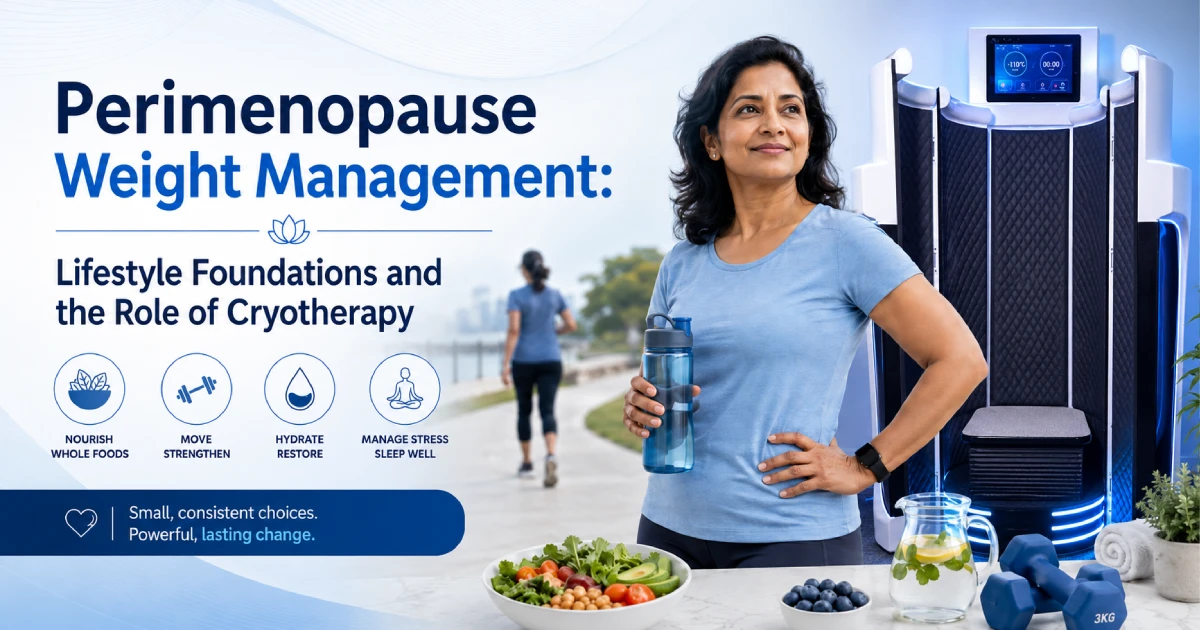
Cryotherapy has gained attention as a supportive wellness option during perimenopause. It involves briefly exposing the body to very cold temperatures, usually for two to four minutes inside a specially designed chamber or through localized cold therapy.
At VeCura, whole-body cryotherapy chambers are available at our ReSculpt centres.
The principle behind cryotherapy is that after cold exposure, the body works harder to restore its normal temperature. This may temporarily increase energy expenditure.
Early research also suggests that cold exposure may stimulate brown fat. Brown fat is a special type of fat that burns energy to produce heat, unlike white fat, which mainly stores energy.
Reported and Possible Benefits of Cryotherapy
- A short-term increase in calorie expenditure while the body returns to its normal temperature.
- Reduced inflammation and muscle soreness, which may support recovery after exercise and help women remain active.
- Improved mood and energy. Some women report feeling refreshed and less stressed after sessions, which may help reduce emotional eating.
An Honest Note About the Evidence
Research on cryotherapy for weight management is still emerging, and the calorie-burning effect on its own is modest.
Cryotherapy is not a standalone weight loss treatment. Its real value may be as a supportive addition to healthy nutrition, strength training, regular exercise, quality sleep and stress management.
Cryotherapy vs. Cryolipolysis: Know the Difference
Cryotherapy and cryolipolysis are often confused, but they are different procedures.
Cryotherapy involves brief whole-body or localized cold exposure. It is generally used to support recovery, mood, energy and overall wellness, with a small temporary metabolic effect.
Cryolipolysis is a doctor-supervised body contouring procedure that uses controlled cooling to reduce stubborn, localized fat pockets.
Both options are available within the VeCura network. Whole-body cryotherapy is available at our ReSculpt centres, while cryolipolysis is available across VeCura clinics.
If your concern is a specific area, such as abdominal fat that remains despite consistent lifestyle changes, a clinical consultation can help determine which option may be suitable for you.
The Bottom Line
Successful weight management during perimenopause depends on realistic expectations and consistent healthy habits.
Hormonal changes may make weight loss slower than before, but they do not make it impossible. Nutritious eating, regular physical activity, strength training, stress management and good sleep remain the most effective strategies.
Cryotherapy may offer supportive benefits for exercise recovery, mood, energy and motivation when combined with a healthy lifestyle.
With the right combination of habits and appropriate clinical guidance, women can manage their weight, improve their health and enjoy a better quality of life throughout perimenopause and beyond.
If you would like a personalised assessment and plan, book a consultation at your nearest VeCura clinic. VeCura has more than 30 branches across South India.
To experience whole-body cryotherapy, visit a ReSculpt centre.
Frequently Asked Questions
Does cryotherapy burn fat?
Cryotherapy may modestly increase calorie expenditure while the body returns to its normal temperature after cold exposure. It may also stimulate brown fat activity.
However, the effect is small on its own. Cryotherapy works best as a supplement to healthy eating, exercise and good sleep rather than as a standalone fat loss treatment.
Is cryotherapy the same as fat freezing or cryolipolysis?
No. Cryotherapy involves brief cold exposure for recovery and wellness benefits. Cryolipolysis is a targeted, doctor-supervised body contouring procedure that uses controlled cooling to reduce localized fat pockets.
Why is losing weight harder during perimenopause?
Declining estrogen levels can shift fat storage towards the abdomen. Muscle mass also decreases with age, while poor sleep and elevated cortisol levels can increase cravings and fat storage.
As a result, the same habits that previously maintained your weight may no longer be enough.
What is the most effective exercise for perimenopausal weight gain?
Strength training is one of the most effective forms of exercise during perimenopause. Preserving and building muscle helps protect the metabolic rate.
Strength training should be combined with regular aerobic activities such as walking, cycling or swimming.