

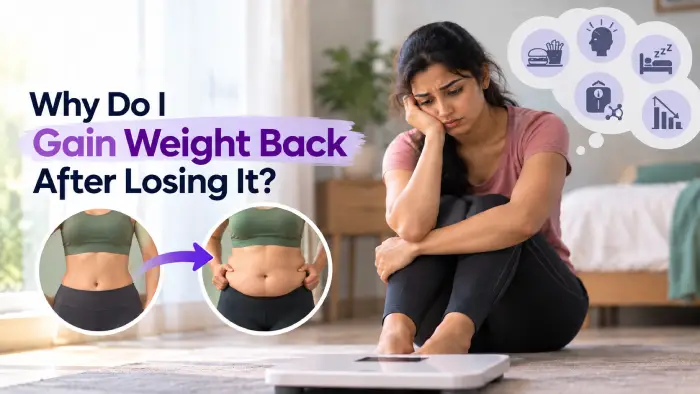
Losing weight can feel incredibly rewarding. You notice changes in your clothes, energy and confidence – and then, months later, some of the weight returns. The first thought many people have is, “What did I do wrong?”
If this has happened to you, it is important to know that weight regain after weight loss is common and does not mean you have failed. Weight management is a long-term process, and the body goes through biological and behavioural changes after weight loss that can make maintaining a lower weight more challenging.
Key Takeaways
- Some weight regain after weight loss is common and is not a personal failure.
- The body adapts to weight loss: it needs fewer calories, and hunger signals can increase.
- Maintenance is its own phase and needs a realistic, sustainable plan.
- Protein, fibre, regular activity and tracking your weight trend all help.
- Speak to your doctor early if you notice a steady upward trend.
Why Does Weight Regain Happen After Weight Loss?
Body weight is regulated by a complex interaction between appetite, energy expenditure, hormones, genetics, environment and behaviour. When you lose weight, your body does not simply stay the same at a lower number on the scale – it adapts to the change.
As body weight decreases, the body generally needs fewer calories, because there is less body tissue to support and less energy is needed to move a lighter body. The body can also undergo metabolic adaptations that make maintaining the lower weight harder. As a result, the calorie intake that once produced weight loss may, over time, lead to slower weight loss or simply weight maintenance.
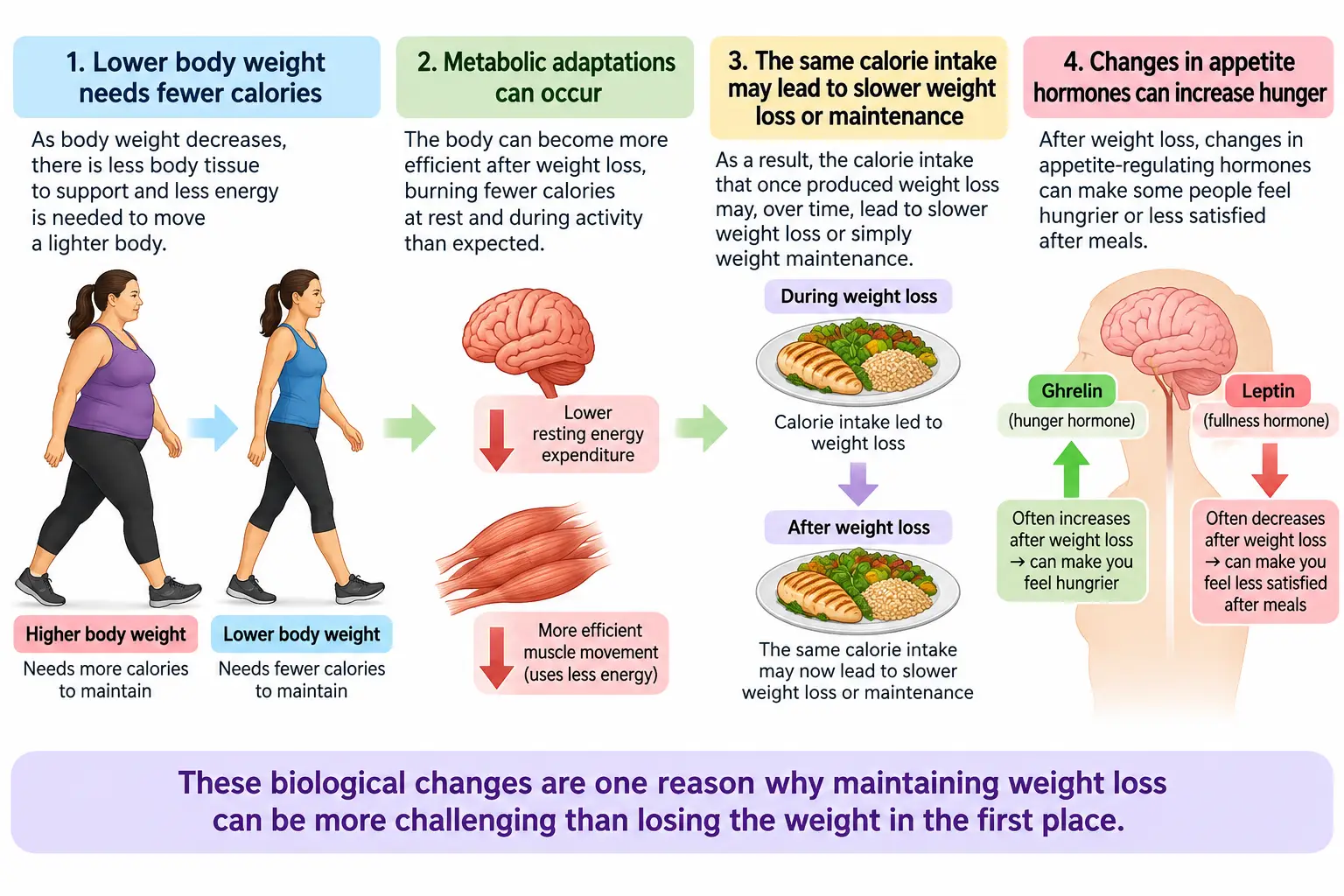
After weight loss, changes in appetite-regulating hormones can also make some people feel hungrier or less satisfied after meals. These biological changes are one reason why maintaining weight loss can be more challenging than losing the weight in the first place.
Weight Regain Isn’t Only About Willpower
It is easy to assume that weight regain happens because someone has “lost motivation”. In reality, it is usually more complicated. People may gradually return to previous eating patterns, become less physically active, experience stress or poor sleep, or simply become tired of following a highly restrictive routine.
This is why sustainable weight management focuses on building habits that can realistically continue after the initial weight-loss phase – not on following a strict plan for a short period and then stopping everything once the goal is reached.
What Happens After You Reach Your Goal Weight?
One of the most important steps in weight management is often overlooked: maintenance. For many people, keeping the weight off requires continued attention to nutrition, physical activity, behaviour and, when appropriate, medical treatment. Weight management therefore does not always follow a simple “lose weight and stop” model.
Maintenance may mean continuing a balanced eating pattern, staying physically active, monitoring your weight trend, addressing lapses early and attending follow-up appointments when needed. Ongoing follow-up, realistic goals and continued lifestyle support matter because weight regain can occur at any stage.
How to Maintain Weight Loss: 6 Practical Steps
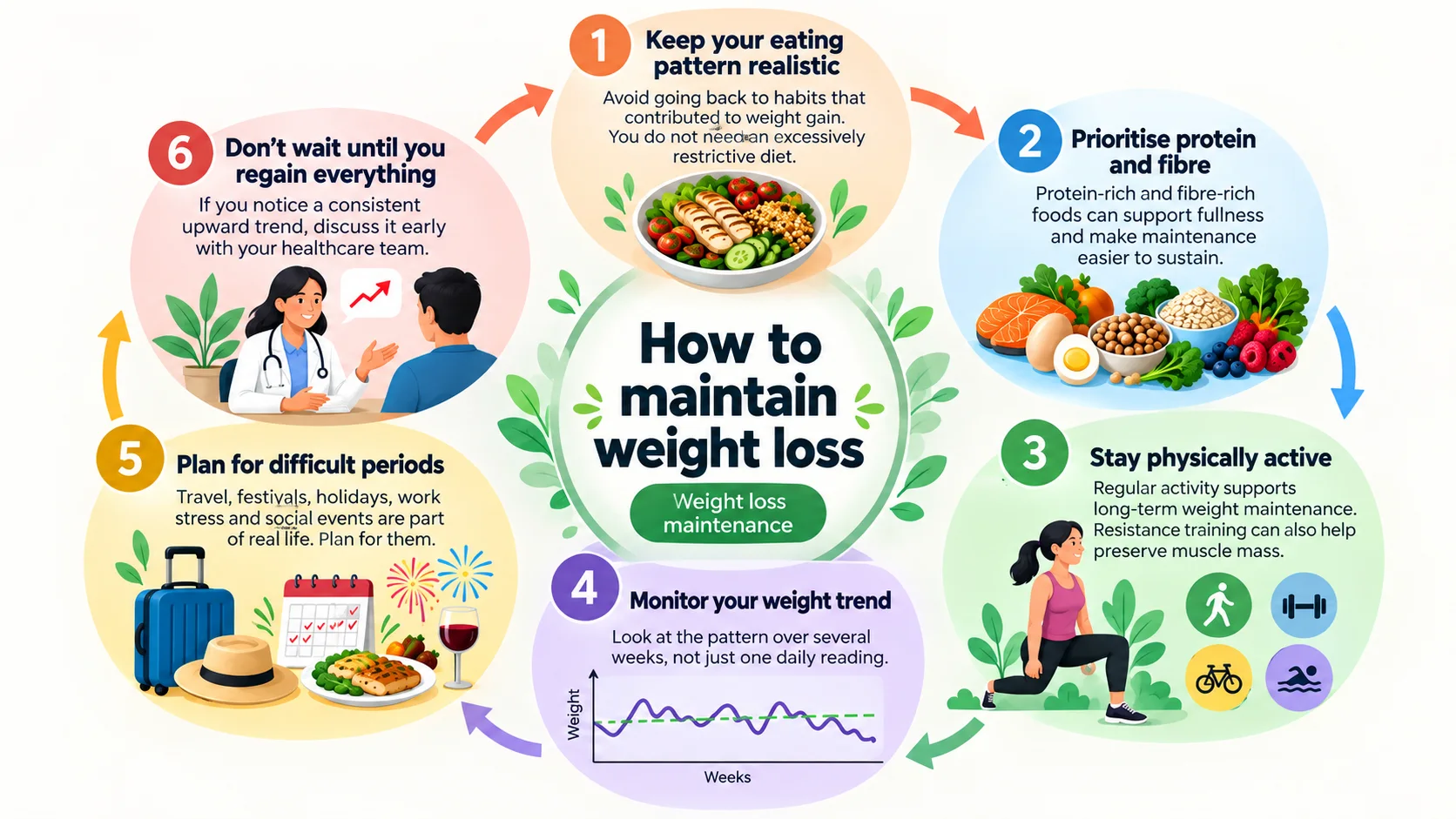
1. Keep Your Eating Pattern Realistic
Avoid returning completely to the habits that contributed to weight gain – but you also do not need an excessively restrictive diet.
2. Prioritise Protein and Fibre
Including protein-rich and fibre-rich foods as part of a balanced diet can support fullness and make a maintenance eating pattern easier to sustain. Individual protein needs vary with age, body composition, activity level and medical conditions.
3. Stay Physically Active
Regular activity supports health and long-term weight maintenance. Resistance training can also help preserve muscle mass during weight loss.
4. Monitor Your Weight Trend, Not a Single Reading
Daily weight can fluctuate with hydration, salt intake, bowel movements, meals and hormonal changes. A temporary rise on the scale does not necessarily mean body fat has increased. Look at the overall trend over several weeks.
5. Plan for Difficult Periods
Travel, festivals, holidays, work stress and social events are part of real life. Planning for them is more sustainable than trying to avoid them completely.
6. Don’t Wait Until You Regain Everything
If you notice a consistent upward trend, discuss it early with your healthcare team.
What About Weight-Loss Medications?
For some people, weight-management medication may be appropriate as part of long-term obesity care. These medicines should be used only when prescribed by a qualified doctor after a medical assessment.
The decision to start, continue, adjust or stop treatment should be individualised, based on your medical history, response to treatment, side effects, goals and risk of weight regain.
Medication should be combined with lifestyle support, not viewed as a replacement for it. If treatment is stopped, a structured plan for ongoing weight maintenance and follow-up is important, as weight regain can occur after stopping medication.
How We Approach Weight Maintenance at VeCura
At VeCura, weight management is approached as an ongoing, medically supervised process rather than a short-term diet. During follow-up, progress is reviewed using weight and body-composition measurements, together with dietary habits, physical activity, adherence and relevant medical factors.
This broader view is particularly useful when weight changes slowly or begins to rise again, because changes in body composition, lifestyle and overall health give more context than body weight alone.
Frequently Asked Questions About Weight Regain
Is it normal to gain weight back after losing weight?
Yes, some weight regain is common, particularly over longer periods. What matters is the overall trend and whether there is a sustained return toward your previous weight. Recognising it early makes it easier to act.
Does weight regain mean my metabolism is damaged?
Not necessarily. Energy requirements usually fall as body weight decreases, and physiological adaptations can make maintenance harder. This is different from your metabolism being permanently “damaged”.
Should I go back to a very low-calorie diet if I regain weight?
Usually, no. Very restrictive diets can be difficult to sustain and may make it harder to meet nutritional needs and preserve muscle mass, particularly when protein intake and resistance training are inadequate.
Why am I gaining weight even though I haven’t changed my diet?
Weight can be influenced by factors beyond food intake, including physical activity, sleep, stress, medications, medical conditions and the body’s adaptation to previous weight loss. If your weight rises unexpectedly despite consistent habits, discuss it with your doctor rather than assuming it is a lack of discipline.
How long should I continue my weight management plan after reaching my goal?
There is no single timeline that works for everyone. Reaching a target weight is usually the start of a maintenance phase, not a reason to stop all support. Your healthcare team can advise how often you need follow-up and which lifestyle or medical strategies should continue.
When should I see a doctor about weight regain?
If you notice a consistent upward trend in weight, increasing hunger, a change in your medications, or other symptoms that could be affecting your weight, a clinical review can help identify the cause and decide whether your plan needs adjusting.
A Final Message
If you have regained some weight after working hard to lose it, try not to see it as a failure. Your body and your circumstances change over time, and successful weight management often needs ongoing adjustment.
The goal is not perfection or staying on a strict diet forever. It is to build an approach you can maintain, recognise changes early and seek support when you need it. Weight loss is one phase of the journey; maintaining the health benefits you have achieved is another important phase.
If you have regained weight or would like support maintaining your progress, you can book a consultation with a VeCura doctor for an individual assessment.
References
- Sumithran P, Prendergast LA, Delbridge E, et al. Long-term persistence of hormonal adaptations to weight loss. N Engl J Med. 2011;365(17):1597–1604.
- MacLean PS, Higgins JA, Giles ER, Sherk VD, Jackman MR. The role for adipose tissue in weight regain after weight loss. Obes Rev. 2015;16(Suppl 1):45–54.
- Aronne LJ, Sattar N, Horn DB, et al. Continued treatment with tirzepatide for maintenance of weight reduction in adults with obesity: the SURMOUNT-4 randomized clinical trial. JAMA. 2024;331(1):38–48.
- World Health Organization. WHO guideline on the use and indications of glucagon-like peptide-1 therapies for the treatment of obesity in adults. JAMA. Published online 1 December 2025.